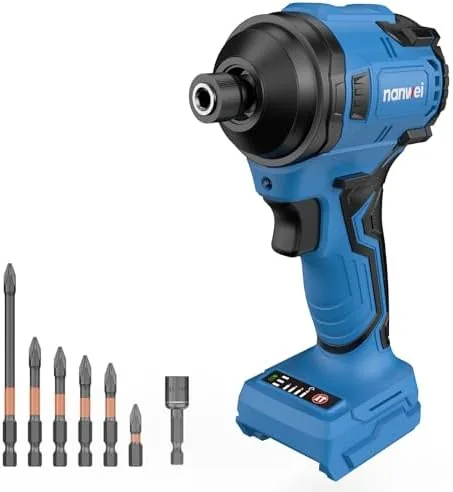
Nanwei — Drill
Nanwei Drills: Professional Power for Budget-Conscious Builders
Nanwei exists for the builder who refuses to compromise between quality and cost. Founded in 2015 in Yongkang, Zhejiang — China's hardware capital — the brand emerged with a clear mission: deliver professional-grade power tools at factory-direct prices. This philosophy speaks directly to DIY home improvement enthusiasts tackling weekend renovation projects, budget-conscious contractors who need reliable tools without premium markups, and automotive hobbyists maintaining their vehicles in home garages.
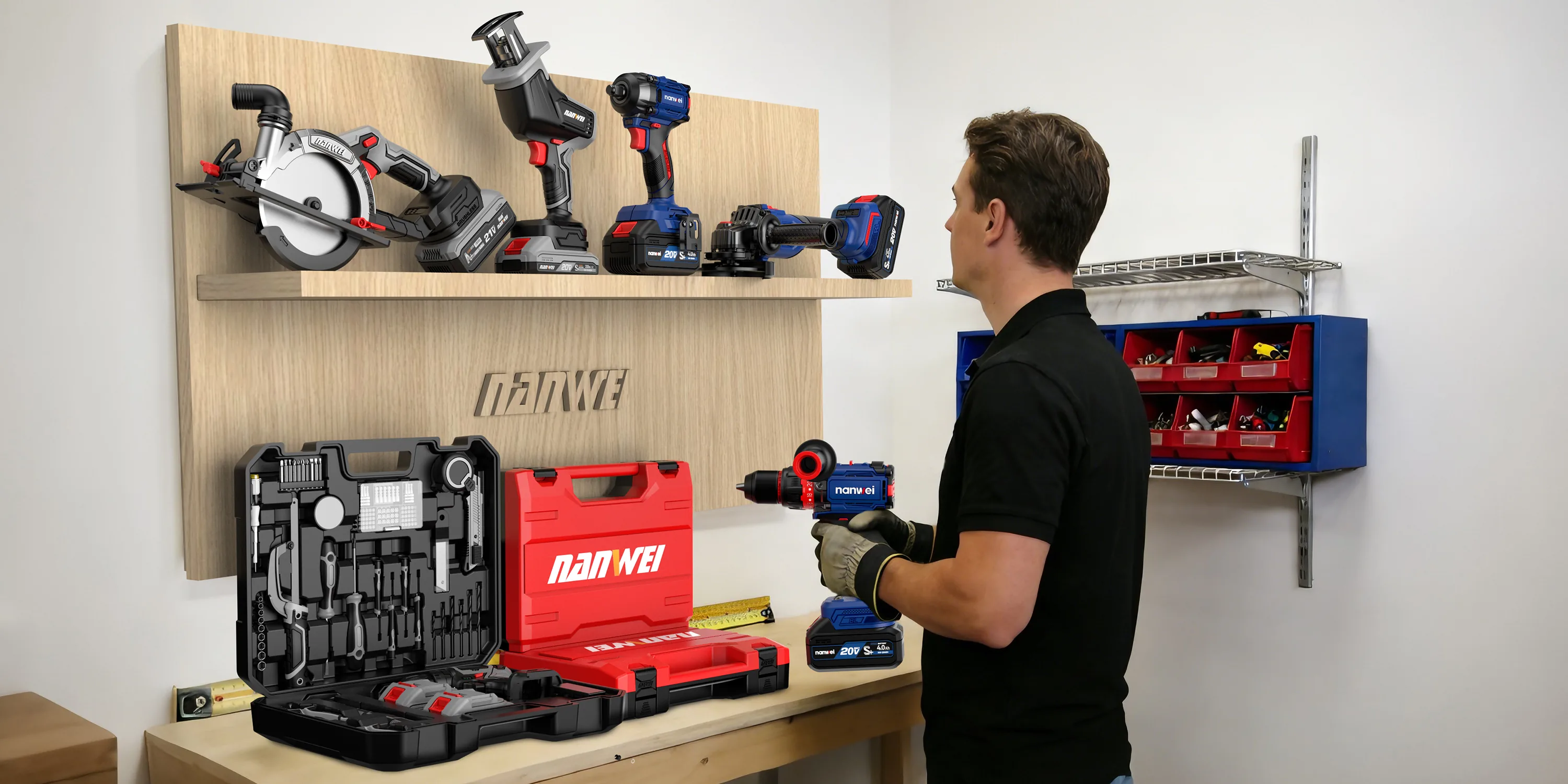
The Nanwei Drill lineup represents everything the brand stands for. These aren't stripped-down budget tools that sacrifice performance for price. Every drill features brushless motor technology, the same advancement found in tools costing two to three times more. The interchangeable 20V/21V lithium-ion battery platform means one investment powers an entire ecosystem of tools, from impact drivers to hammer drills. For professionals managing tight project budgets or homeowners building their first serious tool collection, this approach delivers genuine value.
What sets the Nanwei tool shop apart is the understanding that real work demands real performance. A contractor anchoring into concrete needs 1100 in-lbs of torque that won't stall mid-job. A DIYer mounting shelves into brick needs consistent power without constant battery swaps. An automotive enthusiast loosening stubborn lug nuts needs reliability under pressure. Nanwei engineered every drill in the collection to meet these exact demands, proving that accessible pricing and professional capability belong together.
From Hammer Drills to Impact Drivers: The Complete Collection
The product range spans every drilling and driving application a serious user encounters. At the foundation sits the heavy-duty hammer drill line, purpose-built for masonry, concrete, and brick work. These units combine percussion action with rotational force, allowing users to bore through materials that stop standard drills cold. The lineup extends to dedicated impact drivers engineered specifically for fastening applications, delivering the high-torque, quick-burst power needed for driving screws into dense materials without stripping heads.
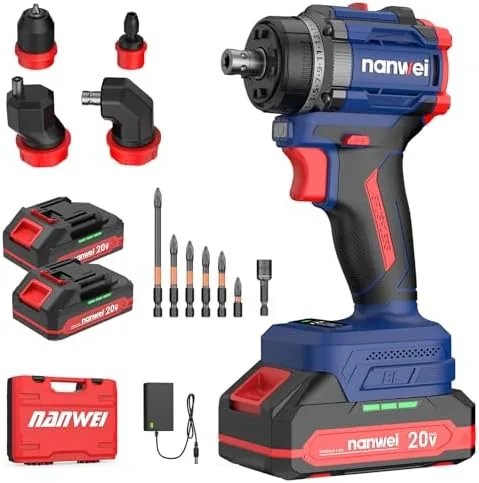
Versatility takes center stage with the innovative 4-in-1 multi-head system. This single tool transforms between a standard drill, angle driver, offset attachment, and extension configuration. Tight spaces under cabinets, awkward angles behind appliances, and confined automotive compartments become accessible with a simple head swap. The approach eliminates the need for multiple specialized tools while maintaining performance across applications.
The collection also includes Makita-compatible options for users already invested in that battery ecosystem. These tool-only offerings let contractors and serious DIYers expand their capabilities without duplicating battery inventory. Whether starting fresh or building on existing equipment, the lineup provides clear pathways to professional-grade performance.
Brushless Motor Architecture: The Technology Behind Extended Lifespan
Traditional brushed motors rely on carbon brushes that physically contact the commutator, creating friction, heat, and inevitable wear. Every rotation grinds these components down, limiting motor lifespan and reducing efficiency over time. The brushless motor architecture eliminates this mechanical contact entirely. Electronic controllers manage power delivery to the motor windings, producing rotation without friction-generating components. The result is a motor that runs cooler, quieter, and longer than conventional designs.
The engineering translates directly to measurable performance advantages. Brushless technology delivers 80% higher power output while consuming 60% less energy than equivalent brushed motors. This efficiency means more work per battery charge, less heat buildup during extended use, and significantly reduced maintenance requirements. Without brushes to replace, the motor becomes essentially maintenance-free for its operational life.
Beyond longevity, brushless architecture enables precise electronic control impossible with mechanical systems. Variable speed responds instantly to trigger pressure. Torque limiting engages smoothly without the lag of mechanical clutches. The 3-speed settings provide genuine power adjustment rather than simple voltage throttling. For users who depend on their tools daily, this precision translates to cleaner work, fewer stripped fasteners, and faster project completion.
The coreless design found in the impact driver line takes this technology further. By eliminating the iron core traditionally found in motor armatures, these units achieve even smoother rotation and more responsive control. The result is a tool that feels intuitive in hand, responding to user input with minimal delay and maximum precision.
Nanwei Drill Features: Torque, Speed, and Control Systems
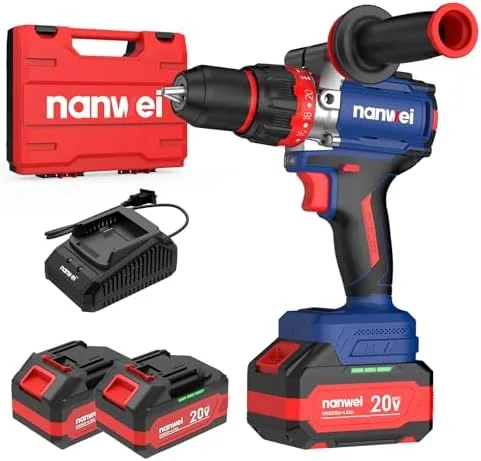
- 1100 In-Lbs Maximum Torque The hammer drill lineup delivers over twice the power of standard 20V drills, enabling users to power through concrete, masonry, and thick steel without motor stall.
- 26,000 BPM Percussion Rate Hammer function provides aggressive material removal for drilling into brick, block, and concrete surfaces where rotation alone proves insufficient.
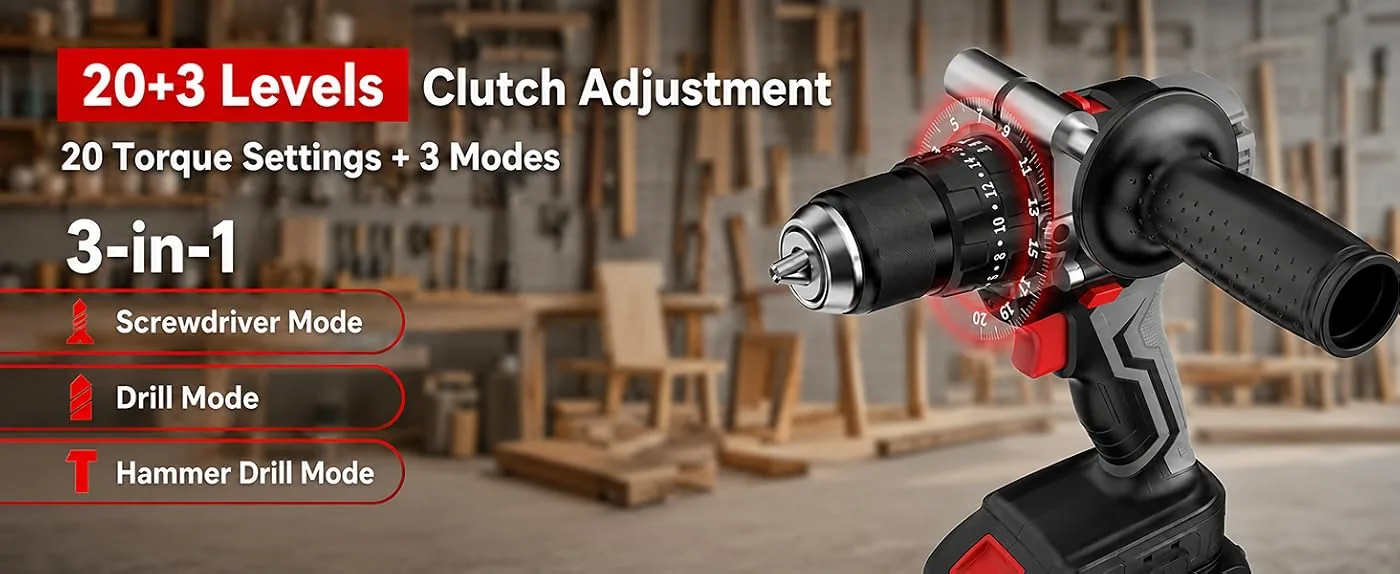
- 20+3 Clutch Settings Twenty torque positions plus dedicated drill and hammer modes provide precise control for applications ranging from delicate electronics work to heavy-duty construction fastening.
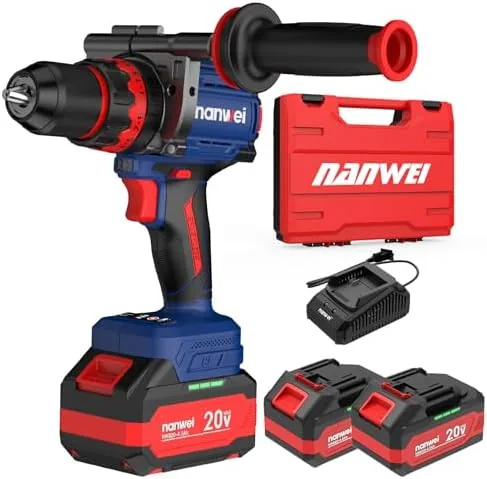
- 1/2-Inch All-Metal Chuck Heavy-duty keyless chuck accepts standard drill bits up to 1/2-inch diameter, providing secure grip without slippage during high-torque applications.
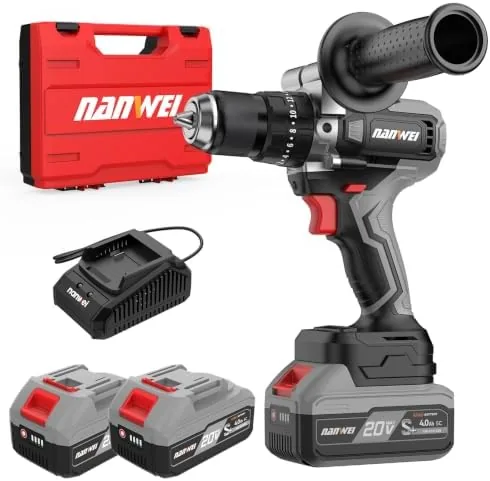
- Fast-Charge Battery System 4.0Ah lithium-ion batteries restore to full capacity quickly, minimizing downtime on job sites. Dual-battery kits ensure continuous operation with one cell always charging.
- Ergonomic Anti-Slip Grip Rubberized handle surfaces and 2-position auxiliary handles maintain secure control during extended use, reducing fatigue and improving precision.
- Variable Speed Trigger Proportional trigger response allows gradual speed buildup for precise hole starting and controlled fastener seating.
The Models Professionals Keep Reaching For
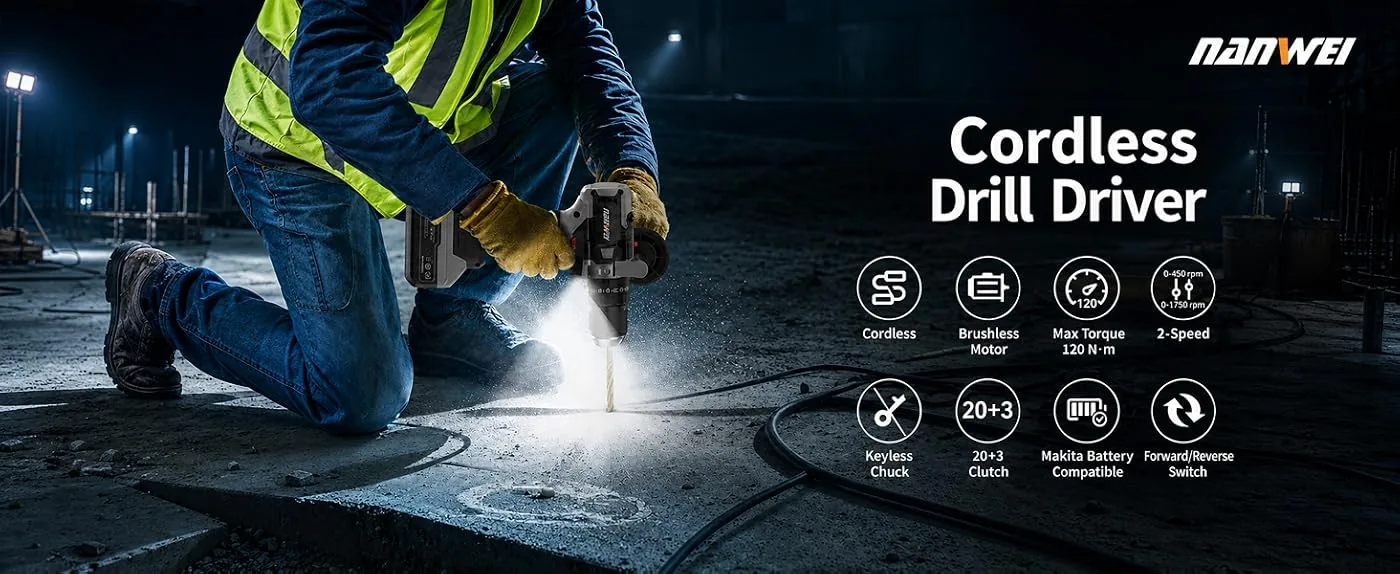
The NANWEI 20V Brushless Hammer Drill with 1100 in-lbs torque consistently ranks as the top performer for serious work. Contractors specify it for anchoring into masonry, and homeowners rely on it for mounting heavy shelves into brick walls. The included dual 4.0Ah battery kit means one cell powers the tool while the other charges, eliminating workflow interruptions. The 20+3 clutch system handles everything from precise cabinet hardware installation to aggressive concrete drilling.
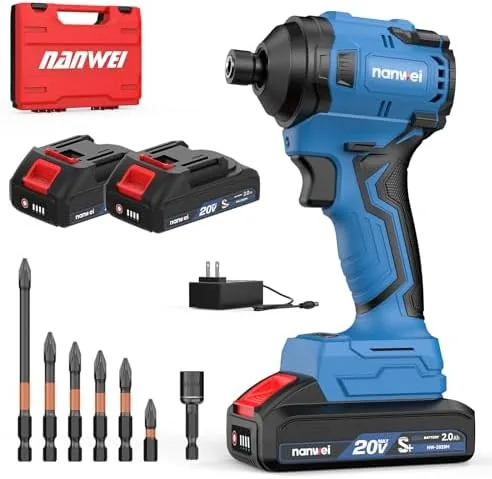
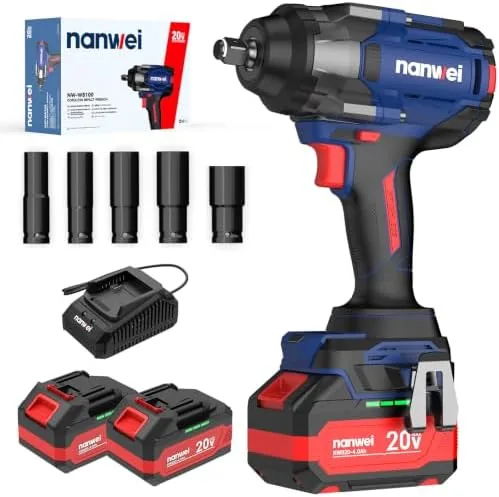
For pure fastening power, the NANWEI 20V Brushless Impact Driver commands attention. Its 2100 in-lbs of torque and 1/4-inch hex shank make quick work of lag bolts, deck screws, and automotive fasteners. The included bit set covers common fastener types, while the dual 2.0Ah battery configuration keeps weight manageable for overhead work. Users consistently report driving 3-inch deck screws without pre-drilling, a task that stalls lesser tools.
The 4-in-1 Multi-Head Cordless Drill Set solves the accessibility problem that frustrates every serious DIYer. The interchangeable head system — right angle, offset, 3-jaw, and extension — transforms one tool into four. Electricians threading wire behind panels, HVAC technicians reaching into ductwork, and homeowners accessing cramped cabinet interiors all benefit from this versatility. At 440 in-lbs maximum torque, it handles genuine work rather than serving as a novelty.
Lithium-Ion Cells, Metal Chucks, and Reinforced Housings
Battery technology anchors the entire tool system. The 20V/21V lithium-ion cells use high-density chemistry that maintains consistent voltage output throughout the discharge cycle. Unlike older NiCd batteries that gradually lost power as charge depleted, these cells deliver full performance until they reach cutoff. The 4.0Ah capacity found in the hammer drill kits provides extended runtime for demanding applications, while 2.0Ah cells in impact driver configurations prioritize weight reduction for extended overhead use.
The all-metal chuck construction on hammer drill models addresses a common failure point in budget tools. Plastic chuck components crack under high torque loads and lose grip over time. The 1/2-inch keyless metal chuck maintains secure bit retention even during aggressive hammer drilling operations. Single-sleeve design allows one-handed bit changes, keeping productivity high when swapping between drilling and driving applications.
Tool housings balance durability against weight through strategic material selection. High-impact polymer construction resists cracking from drops while keeping overall tool weight manageable for extended use. Critical stress points receive reinforcement where internal forces concentrate during high-torque operations. The ergonomic grip surfaces use rubberized overmolding that maintains traction even in dusty or oily conditions common on job sites. Auxiliary handle positions accommodate different user preferences and application requirements.
From Concrete Anchors to Cabinet Hardware: Real Job Site Results
Masonry applications demonstrate where the hammer drill line truly separates from standard rotary drills. Users report boring 1/2-inch holes through concrete blocks for anchor installation without motor strain or excessive heat buildup. The 26,000 BPM percussion rate pulverizes material ahead of the cutting flutes, allowing the drill bit to remove debris efficiently. A typical concrete anchor installation that might require multiple battery swaps with a standard 20V drill completes on a single charge.
Wood and metal work reveals the benefit of the 20+3 clutch system. Cabinet hardware installation demands precise torque control to avoid stripping screw heads or splitting delicate face frames. The lower clutch settings allow fasteners to seat flush without damage. Switching to higher settings handles structural fastening into studs and blocking. The variable speed trigger provides additional control for starting holes in slick surfaces without bit wandering.
Automotive maintenance showcases the impact driver capabilities. Loosening lug nuts frozen by road salt and age requires the kind of instantaneous torque these tools deliver. The 2100 in-lbs output breaks stubborn fasteners free without the rounded-off hex damage that plagues standard ratchet approaches. Reassembly proceeds quickly with consistent torque application that properly seats fasteners without over-tightening. Users completing their own brake jobs, suspension work, and general maintenance report significant time savings compared to manual methods.
The 4-in-1 system proves its value in renovation work where access constraints define the challenge. Electrical box installations behind finished walls, plumbing strap mounting in cramped crawlspaces, and HVAC register fastening in tight soffits all become manageable with the appropriate head configuration. What previously required contorted hand positions or multiple specialized tools now completes with standard technique and a simple head swap.
Nanwei Drill Operation: Maximizing Performance and Battery Life
- Match Clutch to Application Use lower settings (1-10) for small fasteners in softwood, mid-range (11-17) for deck screws and general construction, and high settings (18-20) only for lag bolts and structural fasteners.
- Start Holes at Low Speed Begin drilling with gentle trigger pressure to create a pilot dimple before increasing speed. This prevents bit wandering on smooth surfaces and reduces breakage in brittle materials.
- Engage Hammer Mode Only for Masonry Reserve percussion function for concrete, brick, and block. Using hammer mode on wood or metal wastes energy and accelerates wear without improving performance.
- Charge Batteries Before Full Depletion Lithium-ion cells last longest when charged before reaching complete discharge. The tool's cutoff circuit prevents damage, but regular partial charges extend overall battery lifespan.
- Store Batteries at Partial Charge For extended storage periods, maintain batteries at approximately 50% charge. Fully charged or fully depleted storage accelerates capacity degradation.
- Clean Ventilation Slots Regularly Dust accumulation restricts motor cooling airflow. Use compressed air to clear debris from intake and exhaust slots after dusty operations.
- Inspect Chuck Condition Monthly Verify jaw movement remains smooth and grip remains secure. Light machine oil on the adjustment sleeve maintains operation without attracting excessive dust.
Preventing Injury: Protective Gear and Proper Technique
Eye protection stands as the non-negotiable safety requirement for all drilling operations. High-speed rotation sends chips, dust, and debris flying in unpredictable directions. Impact-rated safety glasses or goggles prevent the eye injuries that send thousands of DIYers and professionals to emergency rooms annually. Hammer drilling into masonry generates particularly aggressive particle ejection that penetrates standard eyewear from peripheral angles, making wrap-around designs the preferred choice.
Secure workpiece clamping prevents the rotation transfer that causes wrist and arm injuries. When a drill bit binds in material, the entire tool attempts to rotate instead. Handheld workpieces become spinning hazards that wrench arms and release bits at high velocity. Proper clamping or bracing keeps materials stationary, allowing the user to maintain control throughout the operation. The auxiliary handle positions on hammer drill models provide additional leverage for controlling high-torque reactions.
Hearing protection becomes essential during extended sessions, particularly with hammer drilling operations. Sustained exposure to power tool noise levels causes cumulative hearing damage that simple foam plugs prevent. The quieter operation of brushless motors compared to brushed designs helps, but percussion action against concrete and masonry generates impact noise that exceeds safe thresholds regardless of motor type. Even brief hammer drilling sessions benefit from hearing protection.
The Right Choice for Renovation Warriors and Weekend Mechanics
Ideal Users
- Homeowners tackling kitchen and bathroom renovations
- Budget-conscious contractors managing material costs
- Automotive enthusiasts performing their own maintenance
- Property managers maintaining multiple units
- DIYers building workshops and storage spaces
- Deck builders and fence installers
Perfect Applications
- Mounting heavy shelving and cabinetry
- Installing concrete anchors for structural attachments
- Driving deck screws and lag bolts
- Removing and replacing automotive fasteners
- Assembling furniture and fixtures
- Drilling pilot holes in various materials
Selecting the Right Drill for Your Specific Work
Material type determines the fundamental tool choice. For work involving concrete, brick, block, or stone, the hammer drill models provide the percussion action these materials demand. Standard rotary drills simply spin against masite surfaces, generating heat and wearing bits without making progress. The 1100 in-lbs hammer drills handle these materials efficiently, while the 1450 in-lbs variant tackles the most demanding commercial masonry applications.
Fastening-focused work points toward the impact driver configuration. The 1/4-inch hex shank accepts standard driver bits instantly, without chuck adjustment. The impact mechanism delivers rotational force in rapid bursts rather than continuous torque, preventing the wrist twist that standard drills cause when screws bind. For deck building, furniture assembly, or any application involving significant screw volume, the 2100 in-lbs impact drivers complete work faster with less fatigue.
Space constraints make the 4-in-1 multi-head system the logical choice. When standard tools cannot physically access the work area, the interchangeable heads provide solutions. Evaluate common work scenarios before purchasing. Electricians, HVAC technicians, and renovators frequently encounter access limitations that justify the multi-head investment. General users with straightforward applications may find the standard configurations more practical.
Battery selection affects both runtime and handling. The 4.0Ah cells in hammer drill kits provide extended operation for demanding masonry work but add weight. The 2.0Ah cells in impact driver packages prioritize lighter weight for overhead fastening and extended use. Users already owning Makita 18V batteries can select tool-only options to leverage existing battery inventory, reducing overall system cost while maintaining full performance.
Nanwei Drill vs. DeWalt, Milwaukee, and Makita: Feature Comparison
| Feature | Nanwei | DeWalt DCD996 | Milwaukee 2804-20 | Makita XPH14 |
|---|---|---|---|---|
| Maximum Torque | 1100-1450 in-lbs | 1200 in-lbs | 1400 in-lbs | 1250 in-lbs |
| Motor Type | Brushless | Brushless | Brushless | Brushless |
| BPM (Hammer Mode) | 26,000 | 38,250 | 32,000 | 30,000 |
| Chuck Size | 1/2" All-Metal | 1/2" Metal Ratcheting | 1/2" Metal | 1/2" Metal |
| Clutch Settings | 20+3 | 11 | Not specified | 2-speed |
| Battery Included | 2x 4.0Ah | Sold Separately | Sold Separately | Sold Separately |
| Weight (bare tool) | 4.2 lbs | 4.7 lbs | 4.9 lbs | 5.0 lbs |
| Price Point | $130-180 | $200-250 (tool only) | $180-220 (tool only) | $190-240 (tool only) |
Specifications based on manufacturer published data. Actual performance may vary by application. Nanwei kits include batteries while competitor prices shown are typically tool-only configurations.
Keeping Your Power Tools Ready for the Next Project
- Post-Use Wipe Down Remove dust, debris, and any moisture from tool surfaces after each use. Accumulated grit works into moving parts and accelerates wear on seals and bearings.
- Chuck Maintenance Apply a single drop of light machine oil to the chuck sleeve monthly. Work the mechanism through its full range to distribute lubrication evenly.
- Battery Terminal Cleaning Inspect battery and tool contacts for corrosion or debris buildup quarterly. Clean with a dry cloth or electronic contact cleaner if residue appears.
- Ventilation Inspection Check intake and exhaust vents for blockage before each use. Restricted airflow causes motor overheating that degrades performance and shortens lifespan.
- Storage Conditions Keep tools in dry locations away from temperature extremes. Moisture promotes corrosion while heat and cold stress battery chemistry.
- Bit and Accessory Care Store drill bits and driver bits in organized cases that prevent contact damage. Replace worn or damaged bits promptly to maintain work quality and prevent tool strain.
- Periodic Function Testing Run tools briefly without load every few weeks during storage periods. This maintains bearing lubrication distribution and confirms operational readiness.