Nanwei — Cordless Power Tools
Nanwei Power Tools: Built for Budget-Conscious Pros and Serious DIYers
Since 2015, Nanwei has operated from Yongkang, Zhejiang — China's historic hardware manufacturing capital — with a singular mission: delivering professional-grade power tools at factory-direct prices that make sense for working people. The brand exists for those who refuse to compromise on performance but understand that premium pricing from legacy brands often reflects marketing budgets rather than actual tool quality. Nanwei serves the contractor who needs reliable torque on every job site, the home renovator tackling weekend projects, and the automotive enthusiast maintaining their vehicle fleet.
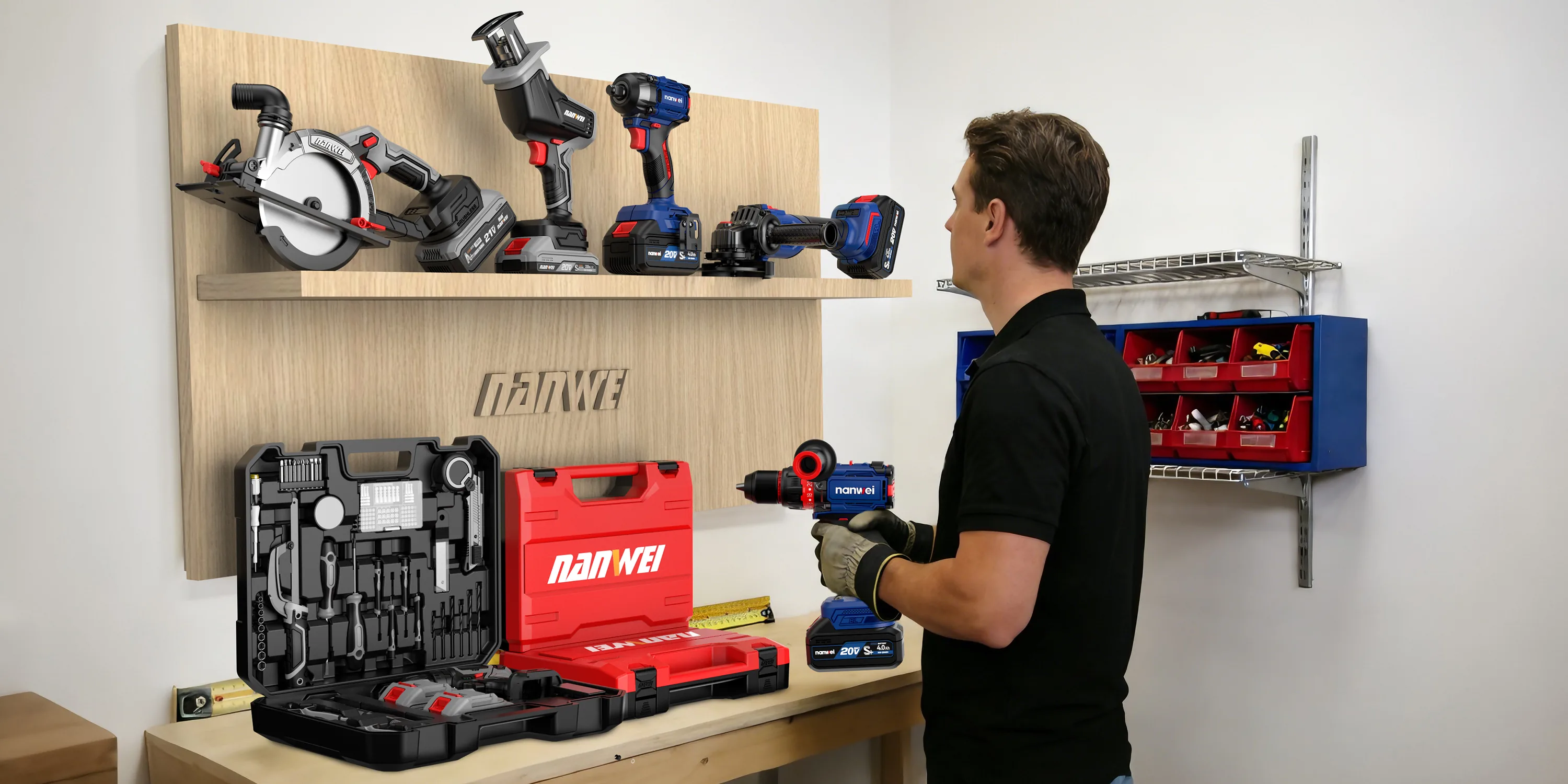
The nanwei tool shop offers a complete ecosystem built around interchangeable 20V lithium-ion batteries, meaning one investment powers an entire workshop. This approach resonates with professionals tired of managing multiple battery platforms and DIYers who want to expand their capabilities without starting from scratch each time. From hammer drills that punch through concrete to impact wrenches that handle stubborn lug nuts, the lineup addresses real-world challenges faced by people who actually use their hands.
What sets this brand apart from bargain-bin alternatives is the commitment to brushless motor technology across the product range. While competitors at similar price points still rely on brushed motors with shorter lifespans and higher maintenance demands, Nanwei standardized on brushless engineering. This decision reflects who the brand serves: practical buyers who calculate total cost of ownership, not just purchase price.
From Drilling to Grinding: A Complete Workshop in One Battery Platform
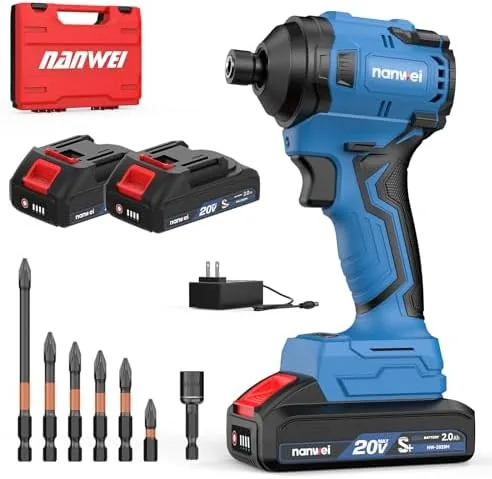
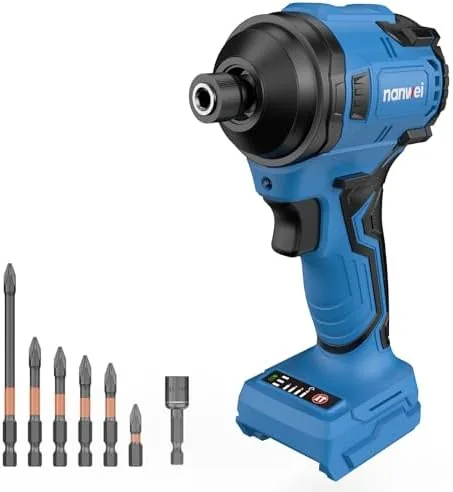
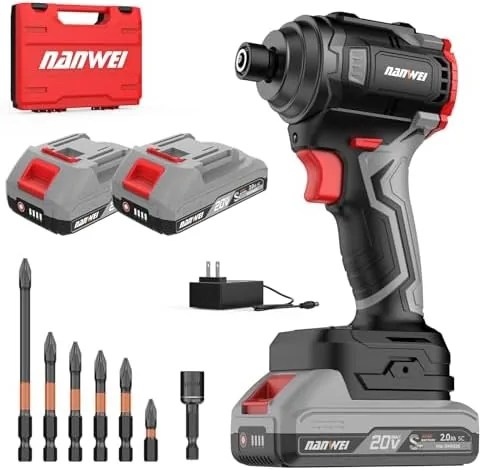
The product catalog spans four core categories designed to handle the majority of tasks encountered in construction, automotive work, and home improvement. Cordless drills anchor the collection, offering variable speed control and hammer functions for everything from delicate screw driving to aggressive masonry work. Impact drivers complement the drilling lineup with specialized high-torque capability for driving long screws and lag bolts without wrist fatigue.
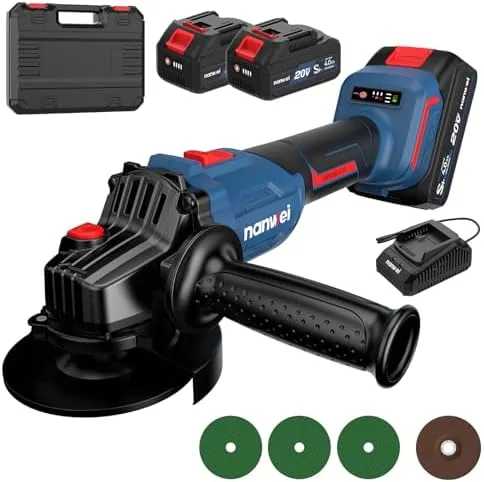
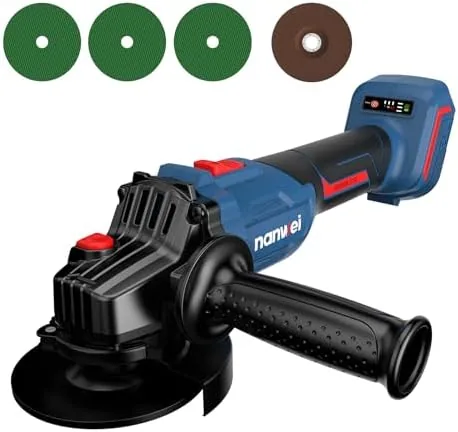
Angle grinders round out the metalworking side of the catalog, delivering variable speeds up to 9800 RPM for cutting, grinding, and polishing tasks across steel, tile, and composite materials. The impact wrench selection addresses automotive needs directly, with models capable of 738 ft-lbs peak torque — enough muscle to handle semi-truck lug nuts and stubborn rusted bolts that would defeat lesser tools.
Each category includes multiple variants tailored to specific use cases and budgets. Some models ship with dual 4.0Ah batteries for extended runtime on demanding jobs, while others pair with 2.0Ah packs suited for lighter-duty applications. The brand also offers Makita 18V battery-compatible versions for users already invested in that ecosystem, eliminating the need to purchase new batteries when switching to more affordable tools.
The Brushless Advantage: Why Motor Technology Matters More Than Brand Names
Brushless motor technology represents the most significant advancement in portable power tools over the past decade, and Nanwei built the entire product line around this engineering standard. Unlike traditional brushed motors that rely on physical contact between carbon brushes and the commutator, brushless designs use electronic controllers to manage the magnetic field. This eliminates the primary wear component, extending motor life by factors of three to five times under equivalent use conditions.
The practical benefits extend beyond longevity. Brushless motors convert battery energy to rotational force with approximately 85-90% efficiency compared to 75-80% for brushed alternatives. That 10-15% efficiency gain translates directly to longer runtime per charge and reduced heat generation during sustained operation. Tools run cooler, batteries last longer between charges, and the motor itself requires zero maintenance over its operational life.
This technology choice also enables more precise power delivery through electronic speed control. The controller reads resistance and adjusts output in real time, preventing stalls under load and delivering consistent torque through difficult materials. When drilling into concrete or driving screws into hardwood, the motor compensates automatically rather than bogging down or burning out. This responsive behavior explains why professionals increasingly demand brushless tools regardless of brand affiliation.
Manufacturing brushless motors costs more than stamping out traditional designs, which explains why budget brands typically avoid them. Nanwei's factory-direct model eliminates distributor margins and retail markup, allowing the company to include premium motor technology at prices competitors reserve for brushed alternatives. The result is professional-grade performance accessible to buyers who previously had to choose between quality and affordability.
Nanwei Tool Shop Features: What Every Model Delivers
- Brushless Motor Standard Every tool in the lineup uses brushless technology, delivering 80% higher power output and 60% lower energy consumption compared to brushed motors. This isn't a premium upgrade — it's the baseline specification.
- Universal Battery Platform The 20V/21V lithium-ion system powers drills, drivers, grinders, and wrenches interchangeably. One charger, one battery format, complete workshop flexibility.
- 3-Speed Variable Control Electronic speed selection allows precise matching of RPM to task requirements. Low speed for delicate driving, high speed for rapid drilling, middle range for general work.
- Ergonomic Grip Design Anti-slip rubber overmolds cover handle surfaces, reducing fatigue during extended use. Two-position auxiliary handles on larger tools provide additional control options.
- Fast-Charge Battery System Included chargers restore depleted 4.0Ah batteries in approximately 60 minutes, minimizing downtime on job sites with intensive tool demands.
- LED Work Lights Integrated illumination on drill and driver models lights the work area in cabinets, crawl spaces, and other low-visibility environments.
- All-Metal Chucks 1/2-inch keyless chucks on drills feature full metal construction for durability and concentricity, eliminating the wobble common with plastic chuck components.
Workshop Favorites: The Models Contractors and DIYers Reach for First
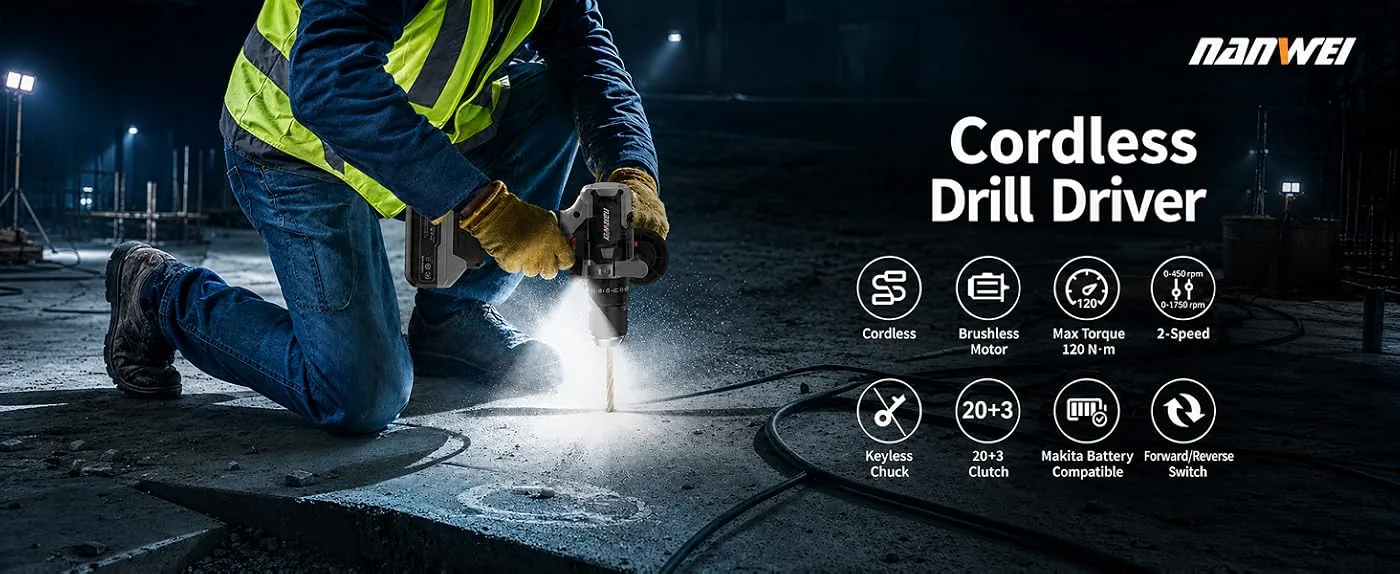
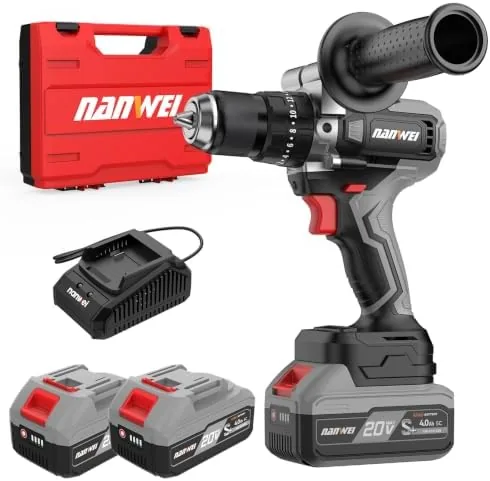
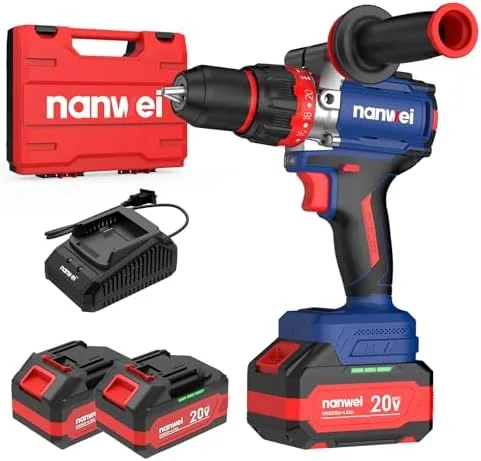
The NANWEI Hammer Drill with 1100 in-lbs torque and dual 4.0Ah batteries consistently ranks as the most popular drill option for serious users. With 26000 BPM hammer action and a 20+3 clutch system, this model handles concrete, brick, metal, and wood without requiring tool changes. The included battery pair provides all-day runtime for renovation projects and construction tasks where outlet access is limited.
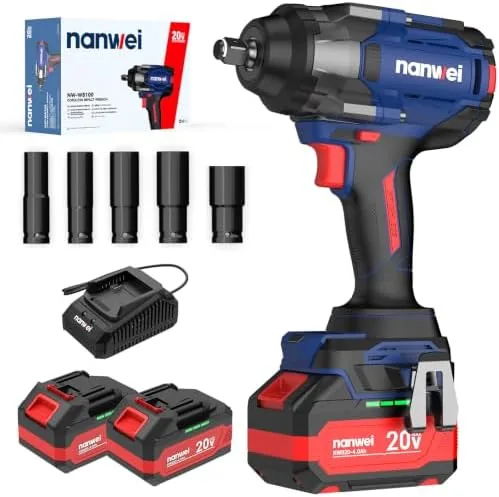
For automotive work, the 738 ft-lb Impact Wrench dominates the selection. This half-inch drive tool delivers torque levels typically reserved for air-powered shop equipment, making it practical for tire changes, suspension work, and heavy equipment maintenance. The brushless motor sustains this output without the heat buildup that plagues lesser impact tools during extended bolt-busting sessions.
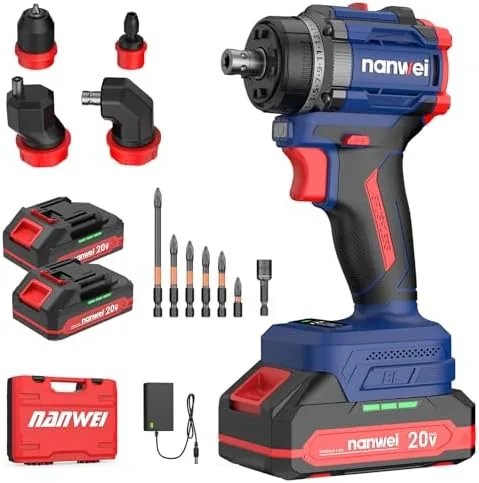
The 4-in-1 Multi-Head Cordless Drill Set attracts buyers who value versatility in tight spaces. Four interchangeable heads — right angle, offset, 3-jaw chuck, and extension — transform a single tool into the equivalent of a small collection. This kit solves problems that standard drills cannot address, reaching into corners, behind obstacles, and at angles impossible with fixed-head designs.
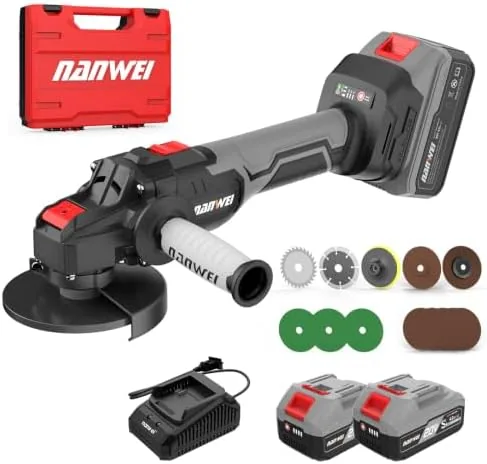
Among angle grinders, the 4-1/2 inch brushless model with 3-speed control sees consistent demand from metalworkers and fabricators. Variable speed operation up to 9800 RPM allows the same tool to cut steel, grind welds, and polish surfaces depending on wheel selection and speed setting. The cordless format eliminates cord management in shop environments where sparks and debris create hazard conditions.
Lithium Cells, Steel Chucks, and Rubber Grips: Inside the Build Quality
Battery cells determine cordless tool performance more than any other component, and the lithium-ion packs powering this lineup use high-density cell configurations rated for 500+ charge cycles before capacity degradation becomes noticeable. The 4.0Ah options pair four 2000mAh cells in parallel, balancing weight against runtime for heavy-duty applications. Smaller 2.0Ah packs reduce tool weight for overhead work and lighter tasks where extended battery life matters less than maneuverability.
Chuck quality separates professional-grade tools from homeowner specials, and the drills feature all-metal 1/2-inch keyless designs with hardened steel jaws. This construction maintains concentricity under load, preventing the bit wobble that causes premature wear and inaccurate holes. The keyless mechanism allows one-handed bit changes without tools, speeding transitions between drilling and driving operations.
Housings combine impact-resistant polymer bodies with strategically placed rubber overmolds at grip points and vulnerable corners. This hybrid approach keeps weight manageable while protecting internal components from job site impacts. The rubber sections provide vibration dampening during sustained operation, reducing the hand fatigue that accumulates over full work days. Auxiliary handles on hammer drills and angle grinders feature two-position mounting for right-handed and left-handed users, with additional rubber coverage where palm pressure concentrates.
All-Day Comfort and Torque That Doesn't Quit
Real-world performance testing reveals what specifications alone cannot communicate: these tools maintain rated output through extended work sessions without the thermal throttling common in budget alternatives. The brushless motors shed heat efficiently, allowing continuous operation at high loads without the automatic power reduction that protects lesser tools from overheating. Contractors report completing full renovation phases without battery or motor limitations forcing breaks.
Comfort during sustained use depends on grip design, weight distribution, and vibration control. The ergonomic handle geometry positions the wrist at natural angles, preventing the repetitive strain that develops when tools force awkward postures. Anti-vibration mounting between motor housings and grip sections reduces the high-frequency oscillation that causes numbness and long-term nerve damage in heavy tool users.
Durability assessments from users across construction, automotive, and manufacturing sectors indicate motor lifespans exceeding three years of professional use. The brushless design eliminates brush replacement entirely, while sealed bearings and weather-resistant housing construction allow operation in dusty, humid, and temperature-variable conditions that degrade exposed-motor tools. This longevity directly impacts cost-of-ownership calculations that professional buyers prioritize over initial purchase price.
Getting Maximum Performance from Nanwei Power Tools
- Match Speed to Material Use lower speed settings for driving screws and working soft materials. Reserve high-speed modes for drilling metal and masonry where RPM determines cutting efficiency.
- Pre-Charge Batteries Before Storage Lithium-ion cells maintain health best at 40-60% charge during extended storage. Avoid leaving batteries fully depleted or fully charged for weeks between uses.
- Select Appropriate Clutch Settings The 20+3 clutch system on drills prevents stripping screws and damaging materials. Start with lower settings and increase until the fastener seats properly.
- Use Auxiliary Handles on Heavy Tools Impact wrenches and hammer drills generate significant torque reaction. Always attach and grip the auxiliary handle to maintain control during operation.
- Keep Ventilation Ports Clear Motor cooling depends on air circulation through housing vents. Periodically blow out accumulated dust with compressed air to prevent thermal buildup.
- Store Tools in Cases Included carrying cases protect tools during transport and storage. This practice extends cosmetic life and prevents damage to exposed components like battery contacts.
Safe Operation Starts with Proper Setup and Technique
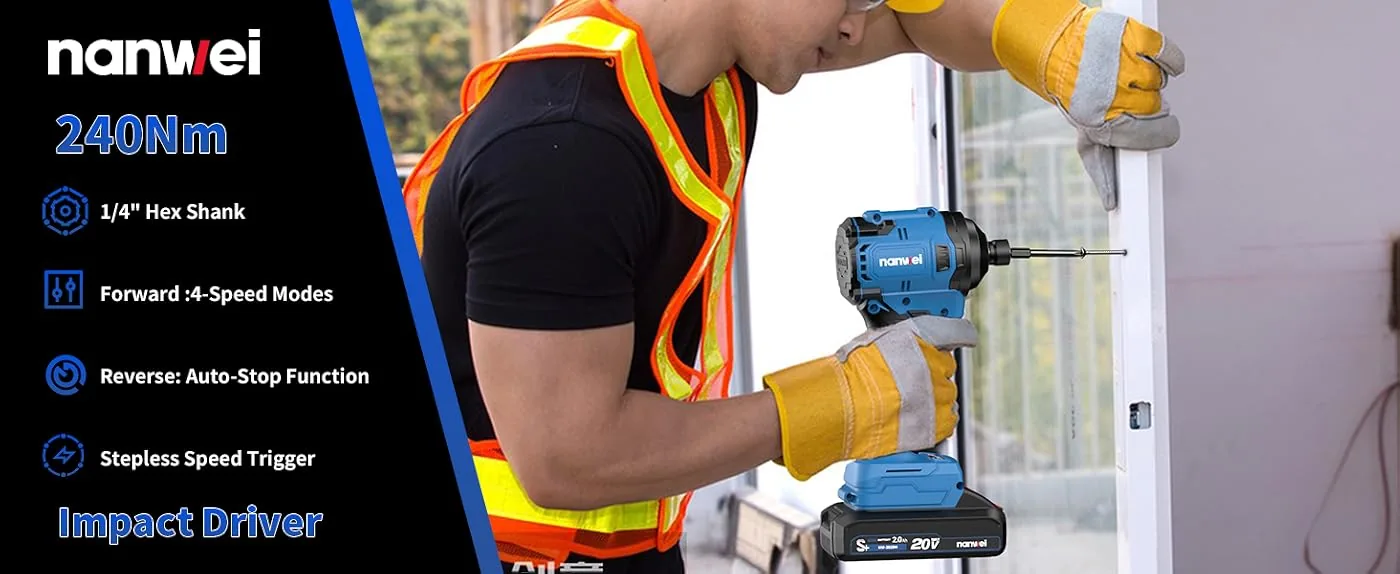
Eye protection is non-negotiable when operating any power tool, but grinders and drills create specific hazards requiring additional precautions. Angle grinders throw sparks and debris at high velocity; full-coverage safety glasses or face shields prevent injuries that standard eyewear cannot address. Impact wrenches and drivers can shatter damaged sockets, making enclosed work areas particularly dangerous without proper eye coverage.
Battery handling requires attention to physical and environmental factors. Never force batteries into chargers or tools if resistance occurs, as this indicates contact misalignment or debris obstruction. Store batteries away from extreme temperatures, particularly avoiding hot vehicle interiors during summer months where lithium cells can enter thermal runaway conditions. Inspect batteries periodically for swelling, cracks, or damaged contacts that indicate replacement needs.
Proper bit and accessory selection prevents tool damage and personal injury. Drill bits rated for the target material resist breakage under load. Grinding wheels must match the grinder's maximum RPM rating, which appears on both the tool specification and wheel packaging. Using wheels rated for lower speeds risks catastrophic wheel failure during operation. Always inspect cutting and grinding accessories before each use, discarding any showing chips, cracks, or visible wear patterns.
The Right Choice for Contractors on a Budget and Weekend Warriors Alike
Professional Applications
- General contractors managing material costs across multiple projects
- Automotive technicians building personal tool collections
- Maintenance workers needing reliable backup tools
- Small business owners equipping crews affordably
- Trade apprentices investing in first professional-grade kits
DIY Applications
- Home renovators tackling kitchen and bathroom updates
- Garage mechanics performing their own vehicle maintenance
- Woodworking hobbyists building furniture and fixtures
- Property owners maintaining rental units between tenants
- First-time tool buyers establishing workshop foundations
Selecting the Right Power Tool Configuration for Your Projects
Battery capacity selection depends on usage patterns and downtime tolerance. For occasional home use with natural breaks between tasks, 2.0Ah batteries provide adequate runtime at lower weight. Professional users and those tackling all-day projects benefit from 4.0Ah options that sustain operation through longer work periods. Models shipping with dual batteries allow continuous work while one pack charges.
Tool-only options suit buyers already invested in compatible battery platforms. The Makita 18V-compatible models deliver identical performance using existing batteries from that ecosystem, avoiding redundant purchases for workshops already standardized on Makita power. These configurations reduce initial cost while providing access to brushless technology at prices below Makita's own brushless offerings.
Feature requirements narrow selection within each category. Standard drills handle driving and drilling in wood and metal, while hammer drills add percussion action necessary for masonry and concrete. Impact drivers optimize for fastening tasks, generating rotational impact that drives screws efficiently without the torque reaction of standard drills. Impact wrenches step up to socket-drive applications like automotive work and structural bolting where torque demands exceed driver capabilities.
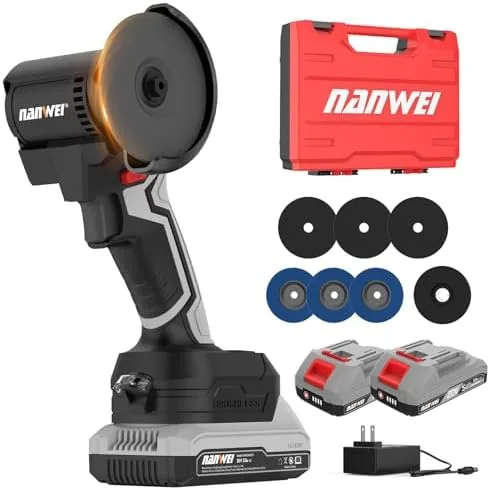
Specialty configurations address niche needs that standard tools cannot satisfy. The 4-in-1 multi-head system reaches angles and tight spaces inaccessible to conventional drills, making it valuable for cabinet installation, HVAC work, and electrical tasks in finished spaces. The compact 3-inch angle grinder suits detail work and confined areas where standard 4-1/2 inch models prove unwieldy, with 15000 RPM capability that maintains cutting speed despite the smaller wheel format.
Nanwei vs. Leading Competitors: Feature and Value Comparison
| Feature | Nanwei | DeWalt | Milwaukee | Ryobi |
|---|---|---|---|---|
| Motor Technology | Brushless (standard) | Brushless (premium models) | Brushless (premium models) | Brushed (most models) |
| Battery Platform | 20V Li-Ion (universal) | 20V MAX | M18 | ONE+ 18V |
| Impact Wrench Peak Torque | 738 ft-lbs | 700 ft-lbs | 750 ft-lbs | 300 ft-lbs |
| Hammer Drill Torque | 1100-1450 in-lbs | 1200 in-lbs | 1400 in-lbs | 750 in-lbs |
| Variable Speed Control | 3-speed electronic | 2-speed mechanical | 4-speed electronic | 2-speed mechanical |
| Typical Kit Price (drill + 2 batteries) | $80-120 | $200-300 | $250-350 | $100-150 |
| Makita Battery Compatibility | Available (select models) | No | No | No |
| Warranty Period | 1 year | 3 years | 5 years | 3 years |
Prices reflect typical online retail averages at time of comparison. Specifications represent comparable model classes within each brand.
Keeping Your Tools Running Strong for Years
- Clean After Each Use Wipe down housings with a dry cloth to remove dust and debris. Use compressed air to clear ventilation slots and chuck mechanisms where particles accumulate.
- Lubricate Moving Parts Periodically Apply light machine oil to chuck jaws and anvil mechanisms on impact tools every few months under regular use. This prevents corrosion and maintains smooth operation.
- Inspect Cords and Chargers Check charger cables for fraying or damage before each use. Damaged power cords create fire and shock hazards that warrant immediate replacement.
- Store in Climate-Controlled Spaces Extreme temperatures degrade battery chemistry and plastic components. Keep tools in heated or cooled spaces rather than uninsulated garages or vehicle trunks.
- Replace Worn Accessories Promptly Dull drill bits and worn grinding wheels stress motors and reduce performance. Fresh accessories protect tool longevity while improving work quality.
- Address Issues Before They Compound Unusual sounds, vibrations, or performance drops indicate developing problems. Investigate promptly rather than continuing operation until complete failure occurs.